Blog
Your company has changed. Here is how to update the public record.
A rename, retired product or leadership change needs an update plan that separates current information from legitimate history.
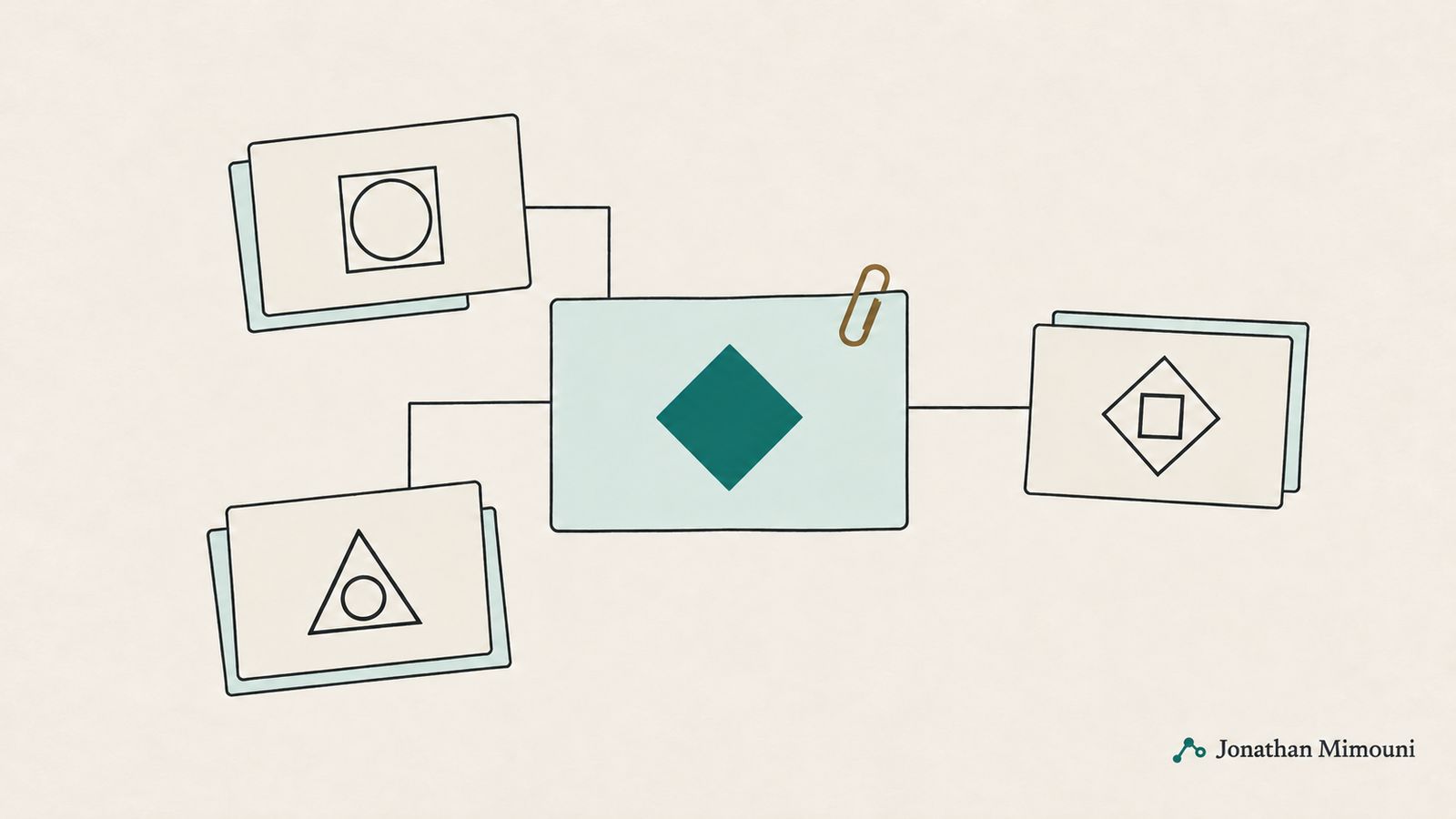
When a company changes its name, leadership or product range, I would plan the public-information update alongside the operational change. Publishing an announcement is only one step: customers may still arrive through a product page, a directory entry or a description that tells the previous story.
The useful question is which remaining statement could cause someone to make the wrong decision. That gives the work an order, and prevents a reasonable update from becoming an attempt to erase the company's history.
Start with the fact that changed
Before opening a spreadsheet of URLs, I would ask for an approved description of the transition. What exactly changed, what remains the same, and what should a customer do differently?
A trading-name change does not necessarily mean a different legal entity. A product that is no longer sold may still have existing customers and support obligations. A former chief executive might remain a board member. Those distinctions belong in the underlying explanation before anyone writes replacement copy.
Consider a hypothetical software business retiring one application while continuing to support existing users. A blanket statement that the product is unavailable could mislead someone looking for help. The clearer record separates sales availability, ongoing support and any replacement product. Each affected page can then explain the part relevant to its reader.
I would give one person responsibility for approving that shared account. Otherwise, several well-intentioned teams can publish slightly different versions of the same change.
Update the pages where a wrong decision starts
The homepage is visible, but it may not be the most consequential page. A customer who searches for a discontinued service can land directly on its old sales page without seeing the announcement.
My first pass would cover the pages that identify the company, describe its offering and explain how to contact or buy from it. That usually means the homepage, About page, relevant service or product pages, contact details and leadership profiles. I would then check support material, downloadable brochures and descriptions reused across the site.
For each item, I would record the old statement, replacement wording, owner and publication status. This makes the task reviewable. “Update the website” is too broad to reveal that the product page changed while the brochure still promises the retired service.
Visible copy comes first. Metadata and existing structured data should agree with it. Google explains that search snippets are generated primarily from page content and can differ by query, so changing a meta description alone does not give control over the displayed wording.
The aim is a coherent explanation wherever a customer enters, with enough continuity to recognize the business they were looking for.
Preserve useful routes into the company
Removing an old name everywhere can make a rename harder to understand. Someone holding an earlier invoice, recommendation or brochure needs a bridge between that name and the current business.
A short “formerly known as” explanation may provide that bridge when it accurately describes the relationship. It should not blur an acquisition, a separate subsidiary or a legal-entity change into a simple rename. The wording needs to reflect the actual event.
The same principle applies to retired products. I would ask whether an old page still helps someone identify a product, obtain support or understand its replacement before deciding to remove or redirect it. A relevant status page can be more useful than sending every old address to the homepage.
Where a redirect is appropriate, its destination should meet the old visitor's need. This is a decision about the journey, not an opportunity to make every legacy URL disappear from an inventory.
Approach external publishers according to the page's purpose
A current business directory, a conference biography and a historical news article do different jobs. I would not send them the same request.
A profile intended to describe the business now is a reasonable candidate for an update. A report accurately describing a former appointment remains accurate as a record of that event. A factual error that was wrong when published deserves a correction request supported by evidence.
For an external update, I would identify the precise passage, explain the change and provide a public source the publisher can check. A concise request is easier to assess than a demand to replace an entire article with corporate copy.
The relationship owner matters too. A partner manager may be better placed to update a partner directory than an unfamiliar outreach address. Communications may own press contacts, while the executive team controls a professional biography.
If the publisher declines to rewrite accurate history, that is not automatically a failure. The practical question is whether current records explain the transition clearly enough for readers to place the earlier account in context.
Separate publication from search processing
Once an owned page is corrected, the editorial task is complete for that page. Search processing is a separate stage.
Google's URL Inspection documentation distinguishes the indexed record from a live test. I would use that distinction when reporting progress: the correction may be visible on the website while the indexed information reflects an earlier crawl. Requesting a recrawl does not establish a completion deadline.
Third-party pages introduce another boundary. Your team can confirm their public text, but it usually cannot inspect their Search Console data. A publisher's confirmation of an edit should therefore be recorded as an edit, without claiming that every search system has processed it.
AI answers deserve their own observations. A corrected page does not guarantee that an assistant will select it, cite it or interpret it correctly. If a particular answer remains inaccurate, preserve the prompt and response for a focused investigation rather than treating it as proof that the entire update failed.
Monitor the remaining confusion
I would track a small set of searches tied to real customer questions: the company name, former name, affected product and relevant leadership role. Include the languages and spellings customers actually use.
For each observation, keep the query, context, result URL and misleading statement together. Record whether the underlying page is still wrong or whether only the search presentation remains outdated. These lead to different next steps.
The report should distinguish sources corrected, requests outstanding and customer-facing confusion still observed. That is more informative than a single percentage marked complete.
I would consider the transition well managed when the company has corrected what it controls, made justified external requests and can explain the remaining exceptions. The internet does not need to forget the previous company. It needs to help people understand what the company has become.
Message me on WhatsApp to plan the search-information updates for your company's change.
Talk to JonathanRelated posts
Fix Inconsistent Company Information Before Pursuing AI Search Visibility
Before asking an AI assistant to describe your business accurately, check whether your own pages agree.
What to do when an AI assistant describes your company incorrectly
Treat an inaccurate AI answer as a specific incident: preserve it, investigate the evidence and separate source corrections from answer changes.